
Based on Spain’s Official State Gazette (BOE-A-2025-7439) — Royal Decree 214/2025, dated 18 March 2025 | Updated to reflect April 2025 publication and 2026 compliance deadlines
This guide is grounded in Spain’s Royal Decree 214/2025 (Real Decreto 214/2025, de 18 de marzo), published in the Official State Gazette (Boletín Oficial del Estado, reference BOE-A-2025-7439) on 12 April 2025. All legal obligations, thresholds, timelines, and definitions are drawn directly from that official legislation.The decree establishes Spain’s mandatory carbon footprint register, replaces the voluntary framework under Royal Decree 163/2014, and sets out binding obligations for large companies and public-sector bodies to calculate their greenhouse gas (GHG) emissions and publish GHG reduction plans.This article interprets those obligations through the specific lens of the fashion and textile industry where compliance is materially more complex than for most other industries. Topics include who is legally obligated, how fashion-specific emissions across multi-tier supply chains must be handled, how to register in Spain’s National Carbon Register, and how this decree fits within the broader EU sustainability reporting landscape.
Key Fact: Royal Decree 214/2025 entered into force two months after its publication in the BOE; meaning from June 2025. The first mandatory reporting cycle covers the 2025 emissions data, with registration in the National Carbon Register required from 2026 onwards.
SECTION 1: Understanding RD 214/2025 in the Fashion & Lifestyle Context
What is Royal Decree 214/2025 and Its Importance for Your Fashion Business?
Published on 12 April 2025, Spain’s Royal Decree 214/2025 transforms carbon footprint reporting from a largely voluntary activity into a legal obligation for a defined class of companies and public-sector institutions operating in Spain.
Fashion is among the most carbon-intensive industries on the planet. Unlike a professional services firm or a technology company, a fashion brand’s carbon footprint is not primarily about the electricity in its offices or the fuel in its delivery vans. It is about the cotton grown in water-stressed regions, the synthetic fibres extruded from petrochemicals, the dye processes that consume enormous thermal energy, and the logistics network spanning dozens of countries.
Royal Decree 214/2025 creates Spain’s National Carbon Footprint, Compensation and CO2 Absorption Projects Register (the Register). It establishes who must report, what must be measured, how reduction plans must be structured, and what compensation mechanisms are available. For fashion brands with operations, subsidiaries, or significant commercial activity in Spain, this is now the law of the land.
The fashion industry accounts for approximately 10% of annual global carbon emissions, more than international aviation and maritime shipping combined. In Spain, fashion and textile brands are among the largest employers and exporters, making this sector a key target for the decree’s ambitions.
The Direct Benefits of Carbon Reporting for Fashion Brands
The Spanish government, consistent with the broader EU regulatory philosophy, acknowledges that mandatory reporting is a mechanism for value creation. The decree explicitly recognises the following business benefits of systematic carbon accounting:
- Lower energy and resource costs through the identification of inefficiencies in manufacturing and logistics.
- Better understanding of exposure to climate-related financial risks, including supply chain disruption from extreme weather events.
- Stronger market position as retail customers, institutional buyers, and investors increasingly require verifiable sustainability credentials.
- Readiness for further EU-level obligations, including the Corporate Sustainability Reporting Directive (CSRD) and the Digital Product Passport.
From Voluntary to Mandatory Carbon Reporting in Spain
Spain’s journey toward mandatory carbon reporting began with Royal Decree 163/2014, which created the country’s first voluntary carbon footprint register. Under that framework, companies could voluntarily register their carbon footprints, compensation activities, and CO2 absorption projects, earning official recognition and a ministry seal but facing no legal compulsion to do so.
The legal impetus for change came from the Climate Change and Energy Transition Act (Ley 7/2021, de 20 de mayo), which mandated that the government establish, by regulation, a typology of companies required to calculate and publish their carbon footprint. Royal Decree 214/2025 is the fulfilment of that mandate.
The 2025 decree builds on this framework. Inscriptions made under the old Register remain valid. The new decree extends scope, introduces mandatory obligations for specific categories of companies and public bodies, expands the types of eligible absorption projects (including the new category of blue carbon), and introduces more rigorous verification requirements.
| Framework | Status Under RD 214/2025 |
| Royal Decree 163/2014 (voluntary register) | Revoked and replaced. Prior registrations remain valid. |
| Voluntary carbon footprint registration | Continues to be available for all organisations. |
| Mandatory registration for large companies | Now required (publication of data, not necessarily register inscription). |
| Mandatory registration for central government bodies | Annually from 2026 (covering 2025 emissions data). |
| Scope 3 reporting for companies | Voluntary under the decree; strategically important. |
| GHG Reduction Plans | Mandatory for obligated entities; minimum 5-year horizon from 2026. |
| Blue carbon absorption projects | Now eligible for inscription in the Register. |
SECTION 2: Are You Subject to RD 214/2025? Three Categories of Obligated Entities
Unlike the UK’s SECR framework with its employee-and-turnover thresholds, Spain’s Royal Decree 214/2025 ties the mandatory obligation to existing non-financial reporting duties under Spanish commercial law. There are three principal categories of entity with obligations under the decree:
Category 1: Large Companies with Non-Financial Reporting Obligations
The primary group of obligated companies are those already required to include non-financial information in their consolidated accounts under Article 49.5 of the Spanish Commercial Code (Código de Comercio) and Article 262.5 of the Companies Act (Ley de Sociedades de Capital). These are companies that:
- Prepare consolidated accounts, OR
- Are capital companies with an average workforce exceeding 500 employees during the financial year AND are either classified as a public-interest entity or qualify as a large company.
These entities must now calculate their annual carbon footprint using the emission factors published by the Spanish Office for Climate Change (Oficina Española de Cambio Climático). They must also prepare a GHG reduction plan and make this information publicly available free of charge on their corporate website. They are not automatically required to register in the National Carbon Register, but may do so voluntarily.
The decree explicitly states it does not expand the group of companies already subject to non-financial reporting obligations beyond those required by Law 11/2018 and the Commercial Code. The threshold is already set.
Category 2: Central Government Bodies and Public Entities
A significant new category introduced by RD 214/2025 is Spain’s central public administration. Ministerial departments, autonomous bodies (organismos autónomos), Social Security management bodies and common services, and other state-sector administrative entities must:
- Calculate their annual organisational carbon footprint.
- Prepare a GHG reduction plan.
- Register their carbon footprint and reduction plan in the National Register on an annual basis, commencing in 2026 for the 2025 emissions data.
- From the 2028 calculation year onwards, include Scope 3 emissions in their calculations.
Regional autonomous communities (Comunidades Autónomas) and provincial councils (Diputaciones Provinciales) may apply the same obligations voluntarily. This is a provision designed to encourage sub-national government leadership.
Category 3: Voluntary Registrants (All Other Organisations)
Any legal person, self-employed worker, or qualifying entity may voluntarily register their carbon footprint, compensation activities, or CO2 absorption projects. This includes smaller fashion brands that do not meet the mandatory thresholds, as well as international brands without a Spanish legal establishment. Voluntary participation confers the right to use the Ministry’s official seal, a commercially valuable sustainability credential in the Spanish and wider European market.
Does This Law Apply to You? (Scenarios)
| Fashion Business Profile | Obligation Under RD 214/2025 |
| Spanish-incorporated fashion group filing consolidated accounts (e.g., Inditex, Mango) | Mandatory carbon footprint calculation, reduction plan, and public disclosure. |
| Large unquoted Spanish textile manufacturer (>500 employees, qualifies as large company) | Mandatory carbon footprint calculation, reduction plan, and public disclosure. |
| Foreign fashion brand (e.g., H&M, Zara Group subsidiary) with Spanish subsidiary required to file non-financial statements | Subsidiary subject to mandatory obligations as part of group non-financial reporting. |
| International brand with Spanish retail operations but no Spanish subsidiary above threshold | No mandatory obligation but voluntary registration recommended. |
| Small or medium Spanish fashion brand (pyme definition under Directive 2013/34/EU) | Not mandated. Voluntary registration available and encouraged. |
| Spanish fashion event organiser (>1,500 attendees) | May register as a ‘large event’ carbon footprint but this is voluntary. |
| Spanish reforestation or coastal restoration project linked to fashion brand offsets | May register as a CO2 absorption project (section b of the Register). |
SECTION 3: What Fashion Brands Must Measure
Royal Decree 214/2025 requires the calculation of an organisational carbon footprint (huella de carbono de organización), defined as the totality of greenhouse gases arising directly or indirectly from an organisation’s activities. The decree structures this measurement around the internationally recognised scopes framework.
Scope 1 — Direct Emissions (Mandatory)
Scope 1 emissions are those arising from sources directly owned or controlled by the organisation. For a fashion or textile business, this includes:
- Stationary combustion: boilers, furnaces, and thermal energy equipment in manufacturing plants, dyeing and finishing facilities, and warehousing.
- Mobile combustion: fuel consumed by company-owned vehicles, including logistics trucks, company cars, and on-site equipment such as forklifts.
- Process emissions: certain chemical treatments in textile wet processing (e.g., chemical finishing agents that release GHGs during application).
- Fugitive emissions: refrigerant leaks from air conditioning systems in retail stores, cold-chain logistics, and corporate offices.
Scope 1 emissions must be included in the registration unless specific minor sources are classified as non-significant i.e. contributing less than 5% of total Scope 1 and 2 emissions. The aggregate of all excluded sources must not exceed 5% of total Scope 1+2 emissions.
Scope 2 — Indirect Energy Emissions (Mandatory)
Scope 2 covers GHG emissions from the generation of purchased electricity and energy (heat, steam, cold, and compressed air) acquired and consumed by the organisation. In practical fashion terms, this is typically the largest reported component at the operational level. It encompasses:
- Electricity consumed in manufacturing and processing facilities.
- Electricity used in retail stores, distribution centres, and corporate offices.
- Purchased heat or steam used in dyeing operations and garment finishing.
- Electricity for e-commerce data infrastructure and logistics operations.
The decree requires the use of emission factors published on the Register’s web portal by the Spanish Office for Climate Change. Where factors for the current reporting year are not yet available, the most recently published factors must be used.
Scope 3 — Value Chain Emissions (Voluntary but Strategically Critical)
Scope 3 covers all other indirect emissions in the organisation’s value chain, both upstream and downstream. Under the decree, registration of Scope 3 emissions is voluntary for private companies (though it is mandatory for public-sector bodies from 2028). However, for any fashion brand, failing to engage with Scope 3 is a material misrepresentation of the organisation’s true climate impact.
Research consistently shows that 80 to 90 percent of fashion industry emissions fall within Scope 3. A fashion brand that reports only its store electricity and company car fuel while ignoring cotton farming, overseas manufacturing, and consumer washing behaviour has disclosed only a fraction of its actual footprint.
The Scope 3 Reality in FashionUpstream (before the brand):Raw material farming and extraction (cotton, wool, polyester) — Tier 4 suppliersFibre processing, spinning, weaving, and knitting — Tier 3 suppliersDyeing, printing, and finishing — Tier 2 suppliersGarment assembly and cut-make-trim operations — Tier 1 suppliersInternational freight: raw materials and finished goods
Downstream (after the brand):Consumer use: washing, tumble drying, and ironing across garment lifetimeEnd of life: landfill, incineration, or recycling of garmentsThird-party logistics: emissions from freight partners not included in Scope 1
Different Requirements: A Summary for Fashion Operations
| Emission Source | Scope | Mandatory Under RD 214/2025? | Fashion Example |
| Fuel combustion in owned facilities | Scope 1 | Yes | Boilers at dyeing plant in Barcelona |
| Company vehicle fuel | Scope 1 | Yes | Delivery trucks, sales rep cars |
| Purchased electricity | Scope 2 | Yes | Retail store grid electricity |
| Purchased heat / steam | Scope 2 | Yes | Steam for fabric finishing |
| Supplier manufacturing energy | Scope 3 | No (Voluntary) | Bangladesh garment factory |
| Cotton farming | Scope 3 | No (Voluntary) | Tier 4 supplier in India |
| Third-party logistics | Scope 3 | No (Voluntary) | DHL shipping from China |
| Consumer garment washing | Scope 3 | No (Voluntary) | Customer use-phase emissions |
| Business travel (flights) | Scope 3 | No (Voluntary) | International supplier visits |
SECTION 4: Building a Compliant GHG Reduction Plan for Fashion
What the Decree Requires: The GHG Reduction Plan
A GHG reduction plan (plan de reducción de emisiones de gases de efecto invernadero) is mandatory for obligated entities. The decree defines a reduction plan as a document through which an organisation establishes its commitment to reducing its carbon footprint over a defined period. It must include at minimum:
- A quantified reduction target, expressed against a defined base year.
- A time horizon of at least five years (from 1 January 2026, for footprints calculated from the 2025 data year).
- The specific measures through which the reduction will be achieved.
- The organisational boundaries and scopes to which the target applies.
The plan must be compatible with the transition to a sustainable economy and consistent with the Paris Agreement’s objective of achieving climate neutrality by 2050, as established in EU Climate Law (Regulation (EU) 2021/1119).
How to Build a Credible Reduction Plan in Fashion & Lifestyle
The challenge for fashion brands is that a credible reduction plan cannot focus solely on Scope 1 and 2 and will be seen as inadequate by investors, retailers, and the general public if it does not address the overwhelming majority of the brand’s actual emissions. While the decree mandates a plan covering the reported scopes, the broader context strongly encourages engagement with Scope 3.
| Area | Key Focus | Actions / Strategies | Impact |
| Material Substitution: The Foundation of Long-Term Reduction | Material choice at design stage (locks ~80% of lifecycle impact) | – Shift from virgin polyester to recycled polyester (rPET) – Adopt organic or regenerative cotton – Explore lower-impact fibres (lyocell/Tencel, hemp, linen) – Reduce blended fabrics | – 30–50% lower GHG emissions (rPET vs virgin polyester) – Avoid fertiliser-related emissions – Improved recyclability – Lower overall lifecycle footprint |
| Dyeing and Finishing: Tackling the Most Energy-Intensive Process | High water and thermal energy consumption in textile processing | – Partner with Tier 2 suppliers using low-water or waterless dyeing (CO₂ dyeing, digital printing) – Consolidate dye batches – Audit chemical finishes (especially PFAS) – Shift to renewable energy (e.g., solar thermal) | – Reduced water use (30–150L/kg baseline) – Lower energy intensity per unit – Reduced toxic and GHG footprint – Decarbonised processing stage |
| Supplier Engagement: The Supply Chain Transition | Scope 3 emissions dominance | – Embed GHG requirements in supplier contracts – Mandate disclosure via tools like Higg FEM – Co-finance renewable energy installations – Set staged supplier targets (e.g., renewable electricity adoption) | – Scope 3 emissions reduction – Improved data transparency – Accelerated supplier decarbonisation – Alignment with regulatory/investor expectations |
| Circularity and Lifetime Extension | Reducing need for new production | – Invest in repair, rental, resale models – Implement design-for-durability standards – Introduce take-back schemes for recycling | – Extended product lifespan – Avoided production emissions – Reduced landfill impact – Improved resource efficiency |
SECTION 5: The National Carbon Register — How to Register
Structure of Spain’s National Carbon Register
The National Carbon Footprint, Compensation and CO2 Absorption Projects Register (Registro de Huella de Carbono, Compensación y Proyectos de Absorción de Dióxido de Carbono) is a public administrative register managed by the Spanish Office for Climate Change (Oficina Española de Cambio Climático) within the Ministry for Ecological Transition and the Demographic Challenge (MITERD).
It is divided into three sections, each serving a distinct purpose:
| Section | Purpose | Key Users in Fashion |
| Section a) — Carbon Footprint & GHG Reduction Commitments | Records organisational and event carbon footprints and associated reduction commitments. | Fashion brands, textile manufacturers, event organisers. |
| Section b) — CO2 Absorption Projects | Records verified carbon absorption projects on Spanish territory, including forestry and blue carbon. | Landowners, conservation organisations, brands funding offset projects. |
| Section c) — Carbon Footprint Compensation | Records the voluntary compensation of registered footprints using verified absorption units. | Fashion brands offsetting residual emissions after reduction measures. |
Step-by-Step: How to Register Your Fashion Brand’s Carbon Footprint
Step 1 — Prepare the Carbon Footprint Report
Before submission, organisations must prepare a comprehensive carbon footprint report (informe de huella de carbono). This must include at minimum:
- A description of the organisation and its activities, including all Spanish operations.
- The calculation boundaries: organisational boundaries (financial control, operational control, or equity share) and operational limits (Scope 1, 2, and any included Scope 3 categories).
- A list of emission sources included and any excluded non-significant sources, with justification that excluded sources do not exceed 5% of Scope 1+2 total.
- Activity data and emission factors used, drawn from the Register’s official published factors.
- The completed calculation tool provided on the Register’s website (if used).
Step 2 — Obtain Third-Party Verification
Most organisations registering under Section a) must obtain an independent verification certificate from an accredited body. The decree recognises the following:
- Entities accredited by national accreditation bodies (such as ENAC in Spain) for GHG verification under ISO 14064, the GHG Protocol, or equivalent standards.
- Entities holding ISAE 3410 accreditation for GHG assurance.
- EMAS or ISO 50001 certified systems, provided additional supporting information is supplied.
Exceptions apply for small and medium enterprises (pymes as defined under Directive 2013/34/EU), associations, foundations, cooperatives, and public administrations, where all significant emission sources have emission factors published by the Spanish Office for Climate Change, these entities may register Scope 1+2 footprints without independent verification. Small enterprises and micro-enterprises have a similar exemption for Scope 3 registrations.
Step 3 — Submit the Application
Applications are submitted electronically through the Ministry’s electronic register (sede electrónica del Ministerio para la Transición Ecológica y el Reto Demográfico). Physical persons may also submit applications at the locations specified in Article 16.4 of the Administrative Procedure Law (Ley 39/2015). In some autonomous communities that have established their own interoperable carbon registers, applications may be directed to the regional authority.
Step 4 — Resolution and Seal
The Spanish Office for Climate Change must resolve and notify the outcome within three months of the application entering the administrative register. If no resolution is issued within three months, the application is deemed approved by administrative silence (silencio administrativo positivo). Approved registrants receive:
- An official recognition document (documento de reconocimiento).
- The right to use the Ministry’s official carbon footprint seal, a commercially valuable sustainability mark for use in marketing, procurement bids, and investor communications.
Registration is free of charge. The decree explicitly states that the creation and maintenance of the Register will not increase public expenditure.
Carbon Footprint in Public Procurement
Spain’s RD 214/2025 is important because it connects carbon reporting with public procurement. Under Article 10, government buyers in Spain can consider a company’s carbon footprint when awarding contracts. Companies can prove this either by being listed in the National Carbon Register or by showing equivalent certifications.
For fashion brands that supply uniforms, workwear, or other products to public-sector clients, such as government departments, regional authorities, hospitals, or schools, this means carbon registration may become essential. Without it, brands could find it harder to win or keep public contracts.
SECTION 6: Carbon Offsets and Blue Carbon — Opportunities for Fashion Brands
The Compensation Mechanism: Offsetting Unavoidable Emissions
Royal Decree 214/2025 provides a formal compensation mechanism allowing organisations to offset registered carbon footprints through verified Spanish absorption projects.
Compensation is defined as the voluntary acquisition of CO2-equivalent units from registered absorption projects, covering part or all of the organisation’s registered footprint, as a contribution to domestic mitigation.
Compensation through the Spanish Register is a voluntary additional step. It is not a substitute for having a credible reduction plan.
Eligible Absorption Projects: What Fashion Brands Can Invest In
Organisations can compensate their footprints using absorption units from projects registered in Section b) of the National Register. Eligible project types include:
- Land use, land use change and forestry (LULUCF) projects: reforestation, afforestation, improved forest management, and soil carbon sequestration on Spanish territory.
- Blue carbon projects: a significant new category introduced by RD 214/2025. Blue carbon refers to carbon stored in marine and coastal ecosystems, including seagrass meadows (praderas de posidonia), saltmarshes, and mangroves, that are managed through biological processes. Spain’s Mediterranean coastline hosts extensive Posidonia oceanica seagrass beds, among the most carbon-dense ecosystems on Earth.
Projects must meet rigorous eligibility criteria including net carbon benefit, additionality (legal and economic), long-term storage (for the required permanence period), and consistency with biodiversity protection, circular economy principles, and adaptation to climate change.
BLUE CARBON OPPORTUNITY: For fashion brands with a Mediterranean identity or environmental brand strategy, investment in Posidonia seagrass restoration projects in Spain’s coastal regions represents a strong alignment between genuine climate impact, local environmental benefit, and authentic brand storytelling.
The Quality Guarantee Fund and Permanence
The decree creates a “guarantee fund” to protect carbon credit buyers. This fund is built using a portion of the carbon credits generated by registered projects.
If carbon credits that have already been sold are later lost due to events outside the project owner’s control, such as wildfires or extreme weather, the fund can cover those losses.
In simple terms, this gives buyers of Spanish carbon credits protection, so they are not at risk of losing the value of their credits if something unexpected happens.
SECTION 7: A 4-Step Action Plan for Fashion & Apparel Executives (2025–2026)
Your Compliance Roadmap
The window between the decree’s entry into force (June 2025) and the first mandatory registration cycle (2026, covering 2025 data) is short. Fashion brands within scope must act immediately. Below is a practical four-step roadmap.
| Sr No. | Actions Items |
| STEP 1. AUDIT & TRACE | Establish your reporting boundary and implement data collection systems immediately. For Spanish operations, identify all Scope 1 and 2 emission sources: energy bills, fuel invoices, refrigerant purchase records. Commission a supply chain mapping exercise to identify key Scope 3 categories: which tier of supplier, in which countries, consuming what types of energy. Deploy a Product Lifecycle Management (PLM) system or supply chain traceability platform if not already in place. Engage your top 20 suppliers by spend and request their energy intensity data using a standardised tool such as the Higg FEM. |
| STEP 2. CALCULATE | Use the official emission factors published on Spain’s National Carbon Register portal to calculate your 2025 organisational carbon footprint. For Scope 3, use textile-specific Life Cycle Assessment (LCA) databases such as the Higg Materials Sustainability Index (MSI), ecoinvent, or the World Apparel & Footwear LCA Database (WALDB). Calculate your intensity ratio: for a retailer, tonnes of CO2e per square metre of floor space; for a manufacturer, tonnes of CO2e per tonne of fabric produced.Obtain third-party verification for Scope 1+2 from an ENAC-accredited body unless an SME exemption applies. |
| STEP 3. REGISTER | Submit your carbon footprint and reduction plan to the National Carbon Register through MITERD’s electronic portal. Ensure your application includes the official calculation tool, the verification certificate (where required), the full reduction plan with a minimum five-year quantified target, and all supporting documentation. In parallel, publish this information on your corporate website: free, accessible, and in a format that stakeholders can understand. |
| STEP 4. REDUCE & REPORT | Launch your GHG reduction roadmap in earnest. Set science-based targets (SBTs) aligned with the 1.5°C pathway under the Science Based Targets initiative (SBTi), which now has a specific framework for the apparel sector. Report progress annually, update your Register inscription each year, and disclose improvement against your base year. Use this process as the foundation for CSRD readiness: the EU’s broader sustainability reporting framework that will apply to larger companies from 2024–2026. |
SECTION 8: RD 214/2025 vs. CSRD — The Broader Sustainability Reporting Landscape
Understanding Where RD 214/2025 Fits
As fashion businesses navigate a rapidly evolving regulatory landscape, it is essential to understand the relationship between Spain’s Royal Decree 214/2025 and the EU’s Corporate Sustainability Reporting Directive (CSRD). Both frameworks require sustainability disclosures, but they differ substantially in scope, applicability, and technical ambition.
| Dimension | RD 214/2025 (Spain) | CSRD (EU) |
| Jurisdiction | Spain only (national law) | All EU member states (including Spanish companies) |
| Scope of Topics | Carbon footprint and GHG reduction plans only | Full ESG: environment (ESRS E1–E5), social (ESRS S1–S4), governance (ESRS G1) |
| GHG Scope | Scope 1 & 2 mandatory; Scope 3 voluntary | Scope 1, 2 & 3 mandatory (with materiality assessment) |
| Reduction Plan | Mandatory, minimum 5-year horizon, Paris-aligned | Mandatory transition plan (climate); included in ESRS E1 |
| Reporting Standard | Spanish emission factors from OECC; ISO 14064 / GHG Protocol for verification | European Sustainability Reporting Standards (ESRS) |
| Assurance | Third-party verification required for most Scope 1+2; no mandatory financial audit | Mandatory limited (then reasonable) assurance by statutory auditor or accredited body |
| Effective Date | June 2025 (in force); 2026 (first mandatory registration) | Phased: large companies FY2024; others FY2025–2026 |
| Public Register | National Carbon Register (public) | ESAP — European Single Access Point (public) |
| Offset Mechanism | Formal compensation through Spanish registered absorption projects | Not a feature — CSRD is disclosure only |
| SME Exemption | Not required if below non-financial reporting threshold | Proportionate VSME standard for SMEs (voluntary) |
SECTION 9: Frequently Asked Questions
Q1: What are the penalties for non-compliance with RD 214/2025?
Royal Decree 214/2025 is primarily an administrative and disclosure obligation. It establishes a Register and reporting duties rather than a direct financial penalty regime. However, non-compliance with the underlying non-financial reporting obligations (under the Commercial Code and the Companies Act) can result in consequences at two levels:
- the financial accounts filed without required non-financial information may be rejected by the Companies Register (Registro Mercantil)
- the statutory auditors must flag non-compliance with non-financial reporting duties in their audit report, creating reputational and governance risk.
For public-sector entities, failure to register constitutes a breach of administrative duty. As the Spanish regulatory environment tightens, particularly in the context of CSRD transposition, dedicated penalty provisions are expected to be introduced.
Q2: Do foreign fashion brands need to register in Spain?
Foreign brands that do not have a Spanish-incorporated subsidiary above the non-financial reporting threshold have no mandatory obligation under RD 214/2025. However, any foreign brand that operates through a Spanish subsidiary that is required to file non-financial information under Spanish commercial law (Article 49.5 of the Código de Comercio) will be subject to the carbon footprint and reduction plan requirements as part of that entity’s obligations.
Additionally, any foreign brand operating internationally that falls within the CSRD’s scope, including non-EU companies with significant EU revenues, will face separate CSRD carbon reporting obligations that are more extensive than RD 214/2025.
Q3: How does RD 214/2025 relate to the EU CSRD?
Royal Decree 214/2025 operates as a national-level measure that addresses specifically carbon footprint registration and GHG reduction planning. CSRD is an EU-level directive transposed into Spanish law that requires comprehensive sustainability reporting across environmental, social, and governance dimensions. CSRD imposes Scope 1, 2, and 3 mandatory reporting for in-scope companies under ESRS E1, making it more demanding than the Spanish decree on climate disclosures. Companies subject to both should align their Spanish carbon footprint data with their CSRD climate disclosures to avoid duplication and ensure consistency.
Q4: Does the decree require me to report on my overseas factories?
The decree focuses on emissions attributable to Spain (huella de carbono atribuible al territorio nacional), meaning that the mandatory Scope 1 and 2 reporting is anchored in Spanish operations. Scope 3, which is where overseas factory emissions would primarily fall, remains voluntary for private companies.
For voluntary Register registrations, organisations may choose to include any or all Scope 3 categories to demonstrate supply chain leadership.
Q5: Can we use the Spanish Register offset to market our brand as ‘carbon neutral’?
Compensation through the Spanish Register means that you have offset a verified quantity of emissions through a domestic absorption project. However, the Spanish decree does not confer a ‘carbon neutral’ or ‘net zero‘ certification per se. It provides an official record of compensation.
To make a ‘carbon neutral’ marketing claim compliantly under EU consumer protection law and the forthcoming EU Green Claims Directive, brands must ensure claims are substantiated, verifiable, and not misleading. The Register’s official seal does provide a credible, government-recognised basis for communication, but should be presented accurately as ‘certified carbon footprint with verified compensation’ rather than an unqualified ‘carbon neutral’ claim.
Q6: What is a ‘large event’ under the decree and is it relevant for fashion?
The decree allows registration of ‘event carbon footprints’ (huella de carbono de evento), defined as the total GHGs emitted directly or indirectly as a result of all activities carried out for a specific event. A ‘large event’ is one exceeding 1,500 in-person attendees. This is directly relevant for fashion brands that organise runway shows, trade fairs, brand events, and fashion weeks. Brands can register the carbon footprint of these events, publish verified reduction and compensation actions, and use the Ministry’s seal on event communications, creating a meaningful ESG communications opportunity.
Q7: What is the verification requirement for SMEs in the fashion sector?
Under the decree, companies that qualify as small and medium enterprises (pymes under Directive 2013/34/EU) are exempt from the mandatory third-party verification requirement for Scope 1+2 registrations, provided that all significant emission sources have emission factors published by the Spanish Office for Climate Change. Small enterprises and micro-enterprises also benefit from this exemption for Scope 3 registrations. The transitional provision clarifies that the EU definition of SME under Directive 2013/34/EU applies to footprints from the 2025 data year registered from 2026 onwards.
GLOSSARY OF KEY TERMS
| Term | Definition |
| RD 214/2025 | Royal Decree 214/2025; Spain’s mandatory carbon footprint and GHG reduction planning regulation, replacing RD 163/2014 and entering force June 2025. |
| Carbon Footprint (Huella de Carbono) | The totality of greenhouse gases arising directly or indirectly from an organisation’s activities, expressed in CO2 equivalent tonnes. |
| National Carbon Register | Spain’s official public register managed by the OECC, recording carbon footprints, compensation activities, and CO2 absorption projects. |
| Scope 1 | Direct GHG emissions from sources owned or controlled by the organisation (e.g., factory boilers, company vehicles). |
| Scope 2 | Indirect GHG emissions from the generation of purchased electricity, heat, steam, or cooling consumed by the organisation. |
| Scope 3 | All other indirect GHG emissions in the organisation’s value chain, upstream and downstream (e.g., supplier manufacturing, consumer use). |
| CO2e | Carbon dioxide equivalent; the standard unit for measuring the total climate impact of all greenhouse gases in terms of equivalent CO2 warming. |
| GHG Reduction Plan (Plan de Reducción) | A document setting out a quantified GHG reduction target, a minimum 5-year time horizon, and the measures to achieve it. This is mandatory for obligated entities. |
| OECC | Oficina Española de Cambio Climático; the Spanish Office for Climate Change, which manages the National Carbon Register. |
| MITERD | Ministerio para la Transición Ecológica y el Reto Demográfico; Spain’s Ministry for Ecological Transition, which oversees the Register. |
| Blue Carbon (Carbono Azul) | Carbon stored and cycled in marine and coastal ecosystems (e.g., seagrass, saltmarshes) through biological processes. A new project category under RD 214/2025. |
| Compensation (Compensación) | The voluntary acquisition of verified CO2 absorption units from registered Spanish projects, to offset part or all of a registered carbon footprint. |
| Non-significant source | An emission source contributing less than 5% of Scope 1+2 totals; these may be excluded from registration, subject to the 5% aggregate cap. |
| Administrative silence (Silencio Administrativo) | If the OECC does not resolve a registration application within 3 months, the application is deemed approved. |
| Large event | An event exceeding 1,500 in-person attendees, for which a separate event carbon footprint may be registered. |
| Pyme (SME) | A small and medium enterprise as defined under Directive 2013/34/EU; relevant to verification exemption provisions. |
| CSRD | Corporate Sustainability Reporting Directive; the EU’s broad mandatory sustainability reporting framework requiring Scope 1, 2 & 3 disclosures with independent assurance. |
| ESRS E1 | European Sustainability Reporting Standard E1 (Climate Change); the CSRD standard governing climate and GHG disclosures, including transition plans. |
| ENAC | Entidad Nacional de Acreditación; Spain’s national accreditation body, responsible for accrediting GHG verification entities under ISO 14064. |
| SBTi | Science Based Targets initiative; the global body that validates corporate climate targets against 1.5°C pathways. Its apparel sector standard is widely used by fashion brands. |
| rPET | Recycled polyester; polyester derived from recycled plastic bottles or post-consumer textile waste. Typically emits 30–50% less GHG than virgin polyester production. |
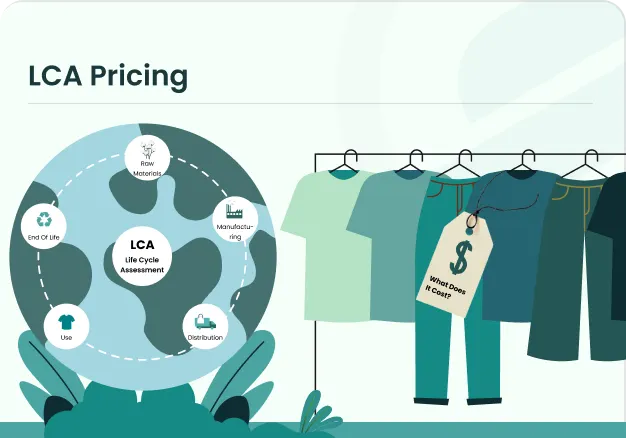
| LCA | Life Cycle Assessment; a methodology for quantifying the total environmental impact of a product across its entire value chain, from raw material extraction to end of life. |
| Higg FEM | Higg Facility Environmental Module; a standardised industry tool for measuring and benchmarking the environmental performance of manufacturing facilities. |
| Guarantee Fund (Bolsa de Garantía) | A reserve of absorption credits contributed by registered projects, used to cover absorption units lost through events outside the project owner’s control. |
| LULUCF | Land Use, Land Use Change and Forestry; the category of GHG accounting covering emissions and removals from land management, afforestation, and deforestation. |
Sources and Further Reading
- Primary source: Real Decreto 214/2025, de 18 de marzo, por el que se crea el registro de huella de carbono, compensación y proyectos de absorción de dióxido de carbono y por el que se establece la obligación del cálculo de la huella de carbono y de la elaboración y publicación de planes de reducción de emisiones de gases de efecto invernadero. Published in the Boletín Oficial del Estado (BOE), núm. 89, de 12 de abril de 2025. Reference: BOE-A-2025-7439.
- Supporting legislation: Ley 7/2021, de 20 de mayo, de cambio climático y transición energética; Ley 11/2018, de 28 de diciembre (non-financial reporting); Código de Comercio Article 49.5; Ley de Sociedades de Capital Article 262.5; Ley 9/2017, de 8 de noviembre (public procurement).
- EU regulatory context: Regulation (EU) 2021/1119 (European Climate Law); Directive 2022/2464/EU (CSRD); European Sustainability Reporting Standards (ESRS) as adopted by the European Commission.
- Industry references: Science Based Targets initiative (SBTi) — Apparel and Footwear Sector Guidance; Sustainable Apparel Coalition — Higg Index; EU Strategy for Sustainable and Circular Textiles (2022); GHG Protocol Corporate Standard; ISO 14064-1:2018.
- For the latest updates on Spain’s National Carbon Register, visit: www.miterd.gob.es | For the latest CSRD guidance, visit: ec.europa.eu/sustainability-reporting
This article is for informational purposes only and does not constitute legal or professional advice. Fashion businesses should consult qualified legal and sustainability advisors to confirm their specific compliance obligations under Royal Decree 214/2025 and applicable EU regulation.