Personal Fashion Carbon Footprint Calculator
This Personal Fashion GHG Footprint Calculator helps sustainability professionals, students, fashion professionals, and climate-conscious consumers around the world estimate the environmental impact of their clothing habits. It provides a personalized estimate of annual fashion-related greenhouse gas emissions (CO₂e) based on how you buy, care for, and dispose of garments.
About This Tool: Understanding Your Personal Fashion GHG Footprint
Fashion is a powerful form of self-expression, but it also carries a significant environmental cost. From manufacturing and shipping to washing and disposal, every stage of a garment’s lifecycle emits greenhouse gases (GHGs). The Personal Fashion GHG Footprint Calculator helps you understand the impact of your clothing habits and where you have the opportunity to make meaningful changes.
This tool is designed to give you a personalized estimate of your annual fashion-related carbon footprint. Whether you’re someone who shops regularly or only occasionally, every item you buy, wash, dry, and discard contributes to your overall emissions.
By inputting your fashion consumption data, the calculator helps you visualize that hidden footprint.
What the Calculator Measures
To calculate your personal fashion carbon footprint, the calculator evaluates emissions across the following lifestyle categories:
Annual Purchases: How many clothing and accessory items you buy each year, and in what categories.
Sustainable Choices: What percentage of your wardrobe consists of sustainably manufactured items, such as those made with organic cotton, recycled materials, or ethical production processes.
Shopping Methods: Whether you shop online with express shipping, standard delivery, or in-store, each of which has different environmental implications.
Pre-Loved Clothing: The percentage of your wardrobe made up of second-hand, thrifted, or vintage items, which generally have a lower carbon impact.
Washing and Drying Habits: Whether you machine wash, hand wash, air dry, or machine dry your clothing and how frequently.
Disposal Methods: How you part with clothing you no longer wear — donating, trashing, repurposing, or returning items through brand take-back programs.
These categories are used to estimate energy use and greenhouse gas emissions (CO₂e) across your personal fashion lifecycle.
Why It Matters
The fashion industry is responsible for up to 10 percent of global carbon emissions more than all international flights and maritime shipping combined. The average consumer today buys 60 percent more clothes than they did 15 years ago, yet keeps each item for half as long.
Most consumers don’t realize the true cost behind their clothing.
A single t-shirt can take over 2,700 liters of water to produce, and fast shipping methods significantly increase a product’s carbon footprint. Similarly, machine drying instead of air-drying adds to household energy consumption.
By using this calculator, you gain insight into how small decisions like choosing second-hand clothes, washing with cold water, or line drying can meaningfully reduce your emissions over time.
Take Action with Your Results
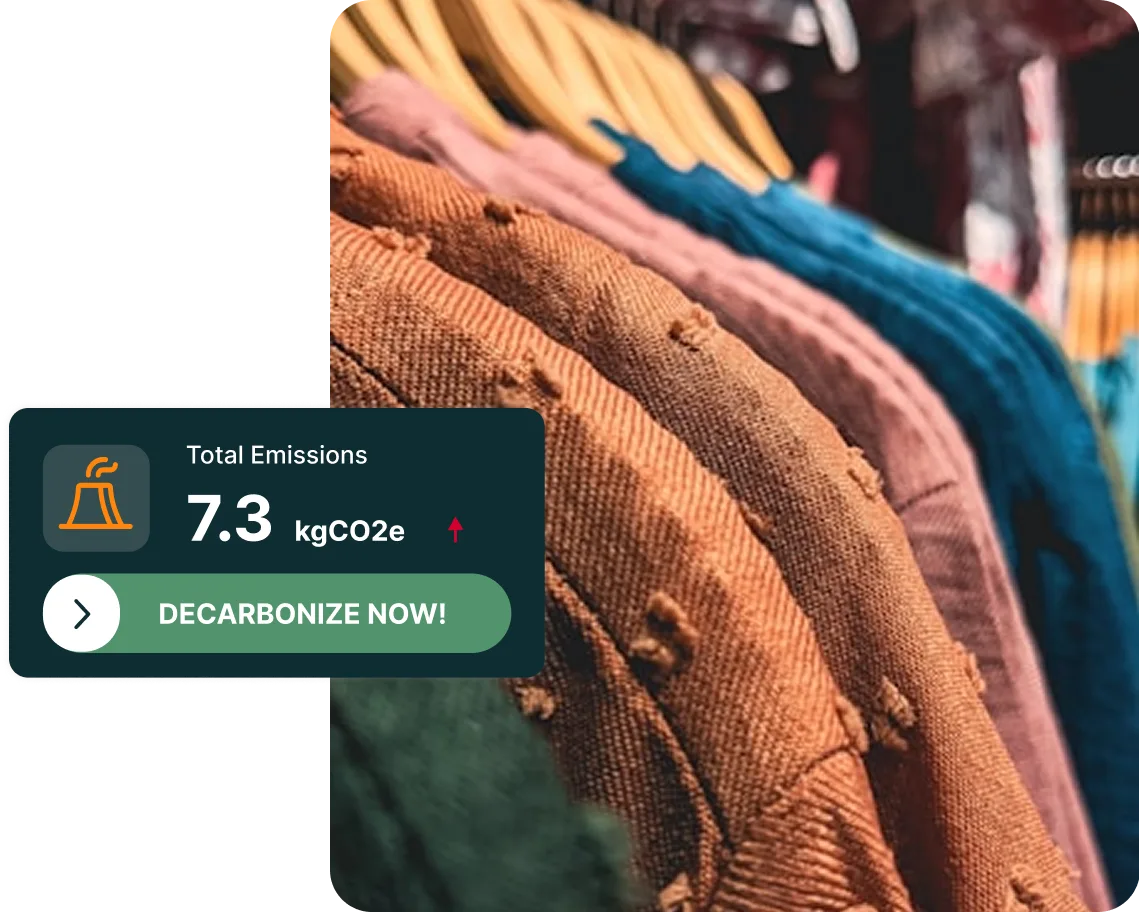
Once you complete the calculator, you’ll see your estimated annual GHG output from fashion activities.
This number isn’t meant to make you feel guilty it’s meant to empower you.
Understanding where your impact comes from helps you take smarter, more sustainable actions.
Here are some changes you can start with:
- Buy fewer, better-quality items
- Support ethical and transparent fashion brands
- Opt for slower shipping
- Wash only when needed and always in full loads
- Choose natural drying over machine drying
- Reuse, repair, and donate clothing instead of throwing it away
Every choice matters and it adds up.
Ready to Learn Your Impact?
Scroll back up and complete the tool.
Use the results as a first step toward building a conscious, climate-aware wardrobe.
Together, we can reduce the environmental cost of fashion, one garment at a time.
Upcoming regulations like DPP will enable to make better sustainable clothing choices.
Visit our blogs.
Check our Products.
Summary
- Estimates annual personal fashion-related CO₂e emissions
- Suitable for users worldwide
- Covers purchasing, garment care, shipping, and disposal
- Uses metric units
- Privacy-conscious and no login required

 EcoLoom