
In the race to decarbonise fashion, measuring emissions at the product level has shifted from “nice to have” to near-necessity. New rules from the EU, France and the UK are accelerating expectations for credible environmental claims. Consumers, regulators, and B2B buyers alike want more than broad net-zero pledges — they want numbers, proof, and transparency.
That’s where ISO 14067 comes in. As the international standard for calculating the carbon footprint of products (CFP), it gives fashion brands a consistent, science-based way to account for the full climate impact of a garment, from raw material extraction to end-of-life.
This guide breaks down what fashion brands need to know about ISO 14067: what it is, how it fits into the broader LCA ecosystem, how to implement it in practice, and how it connects to the regulatory shifts reshaping the industry in 2025 and beyond.
Whether you’re preparing for Digital Product Passports, aligning with the EU Green Claims Directive, or just aiming to back up your climate goals with real data, this is your starting point.
What is ISO 14067 and Why It Matters for Fashion
ISO 14067 is the international standard for calculating and reporting the carbon footprint of products (CFP). It outlines how to quantify all greenhouse gas (GHG) emissions associated with a product over its life cycle, from raw material extraction, through production and distribution, to end-of-life.
The result is a footprint expressed in CO₂-equivalent emissions, with transparent methodology and consistent system boundaries.
First published by the International Organisation for Standardisation (ISO) in 2018, ISO 14067 builds on the more general LCA standards — ISO 14040 and 14044 — but narrows the focus specifically to climate impact. Where other frameworks may account for water use, toxicity, or eutrophication, ISO 14067 is designed for one thing: measuring a product’s contribution to climate change.
In fashion, this specificity is more than helpful — it’s essential. With over 95% of fashion’s emissions sitting in Scope 3, brands need a way to account for impacts in the parts of their supply chain they don’t directly control. That’s where ISO 14067 comes in.
What ISO 14067 actually covers
At its core, ISO 14067 provides a detailed methodology for how to:
- Define the goal and scope of a carbon footprint study
- Choose the functional unit (e.g. 1 T-shirt, 1 pair of jeans)
- Set system boundaries (typically cradle-to-grave, though cradle-to-gate is also allowed)
- Collect primary and secondary data across the supply chain
- Use appropriate emission factors and global warming potentials (GWPs)
- Handle tricky aspects like allocation, land use change, and uncertainty
- Communicate results in a way that’s transparent, verifiable, and not misleading
Crucially, ISO 14067 also makes clear that carbon offsets cannot be included in product carbon footprint claims. This protects against greenwashing and ensures brands are reporting actual, product-specific emissions — not externalised compensations.
Why it’s becoming a non-negotiable for fashion brands
ISO 14067 isn’t the only way to calculate a product’s carbon footprint but it’s increasingly becoming the standard baseline for regulatory compliance, especially in the EU. Here’s why it’s now essential:
- France’s AGEC Law mandates carbon labelling for apparel products sold in the French market, based on lifecycle analysis, with ISO 14067 as one of the recognised frameworks.
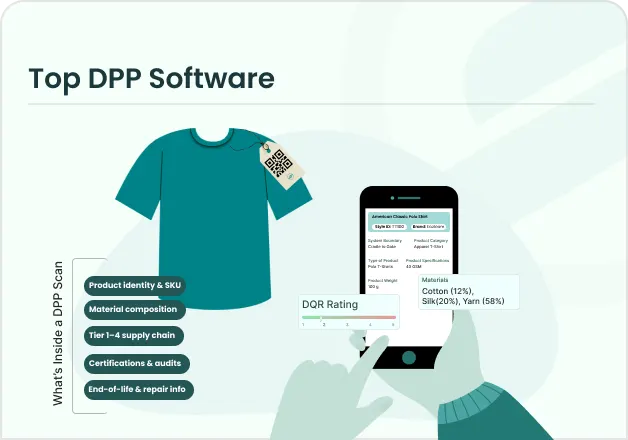
- The EU’s upcoming Digital Product Passport will require product-level environmental data, likely aligned with ISO or PEF methodologies.
- Under the (paused but influential) EU Green Claims Directive, brands making carbon-related claims may be required to back them with ISO 14067-conformant analysis.
- Sustainability platforms like GreenStitch use ISO-aligned methods, meaning brands using GreenStitch are already stepping into ISO 14067 territory.
But beyond compliance, ISO 14067 offers something more strategic: a way to understand and compare the climate impact of materials, processes, and supply chain decisions. That’s valuable not just for reporting, but for actual impact reduction.
For fashion brands navigating 2025’s climate disclosure landscape, ISO 14067 is no longer niche — it’s foundational.
How ISO 14067 Fits Within the LCA Ecosystem
To understand ISO 14067 properly, it helps to place it in context. It doesn’t replace traditional Life Cycle Assessment (LCA) — it builds on it. Think of it as a focused chapter in a broader environmental accounting handbook.
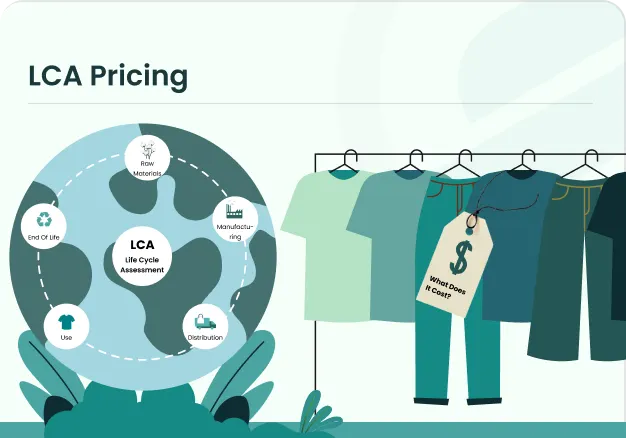
At the heart of any product’s carbon footprint is an LCA: a method that traces the environmental impact of a product from raw material to end-of-life. How much a life cycle assessment costs depends on scope, SKU volume and whether the study is consultant-led or run on a platform. ISO 14067 takes that approach and zeroes in specifically on greenhouse gas (GHG) emissions, offering a standardised, verifiable way to calculate and communicate just the carbon component of an LCA.
But ISO 14067 isn’t the only framework out there. In fashion, it often sits alongside (or gets confused with) other standards like ISO 14040/44, the GHG Protocol Product Standard, and the EU’s Product Environmental Footprint (PEF). Each has its own scope — and knowing when and how to use them matters.
ISO 14067 vs ISO 14040/44
ISO 14040 and ISO 14044 are the foundation of modern LCA methodology. They outline how to conduct a full life cycle assessment, from setting the goal and scope to data collection, impact assessment, and interpretation.
- ISO 14040 lays out the principles and framework.
- ISO 14044 provides the requirements and guidelines for executing an LCA.
So where does ISO 14067 fit in?
ISO 14067 builds on the principles of 14040/44, but narrowly targets carbon emissions. It’s essentially a climate-specific extension of the LCA approach.
Key differences:
| ISO 14040/44 | ISO 14067 |
| Multi-impact (water, toxicity, etc.) | Single-impact: climate change (GHG emissions only) |
| General LCA guidance | Specific to product carbon footprint |
| Broad application across sectors | Often used for climate disclosures and comparisons |
| Not directly consumer-facing | Often used to support product labelling or claims |
For fashion brands, ISO 14067 provides a focused, regulation-aligned pathway for footprinting garments without needing to run a full 16-indicator LCA (though that’s also valuable in many cases).
ISO 14067 vs GHG Protocol and EU PEF
GHG Protocol Product Standard
The GHG Protocol is widely used for corporate emissions reporting, but it also has a Product Life Cycle Accounting and Reporting Standard. It overlaps significantly with ISO 14067, both are lifecycle-based, emissions-focused, and follow similar system boundaries.
However, ISO 14067 has a stronger emphasis on comparability and third-party verification, and it is better aligned with formal product footprint claims. GHG Protocol is sometimes looser on data quality requirements, especially when used internally.
Product Environmental Footprint (PEF)
PEF is the EU’s preferred methodology for calculating and comparing the environmental impact of products — and it’s far broader than ISO 14067. It uses 16 environmental indicators, from climate change to water scarcity and ozone depletion. It’s also sector-specific, meaning it draws on Product Environmental Footprint Category Rules (PEFCRs) for fashion, which are currently in draft form for apparel and footwear.
Key differences:
| ISO 14067 | EU PEF |
| Focused on GHG emissions (CO₂e) | Multi-impact, 16 indicators |
| Global standard | EU-driven, increasingly tied to regulation |
| Works across all industries | Sector-specific rules via PEFCR |
| Widely used for product footprint | Becoming baseline for EU eco-labelling and DPP compliance |
For fashion brands selling into the EU, it’s likely that ISO 14067 will be a useful baseline, especially where tools or data sources haven’t yet adapted to PEF. But long term, both may be required.
When to use what?
| Use Case | Recommended Framework |
| Calculating a product’s carbon footprint for internal tracking | ISO 14067 or GHG Protocol Product Standard |
| Supporting a marketing claim about lower emissions | ISO 14067 (with third-party review) |
| Preparing for Digital Product Passport or EU eco-labelling | PEF (with sector-specific rules) |
| Conducting a full environmental LCA | ISO 14040/44 |
For fashion brands navigating an increasingly regulated landscape, ISO 14067 offers a credible, focused, and globally recognised tool — one that complements, rather than competes with, other frameworks.
Life Cycle of a Garment: How ISO 14067 Measures Carbon Footprint
The power of ISO 14067 lies in its ability to turn a complex supply chain into a quantifiable carbon footprint. But that’s only possible if you map the full life cycle of a product — from its first thread to its final disposal.
In ISO 14067 terms, this means applying a “cradle-to-grave” approach: accounting for all greenhouse gas (GHG) emissions associated with each stage of a product’s life, from raw material extraction through to end-of-life.
In fashion, where supply chains are fragmented, global and often opaque, this is no small task. But with the right functional unit, boundary definition, and data structure, product-level carbon footprints can become a strategic tool — not just a reporting requirement.
What is ‘cradle to grave’ in fashion terms?
ISO 14067 allows several types of system boundaries, but the most robust and commonly used for regulation or comparison is cradle-to-grave. In a fashion context, that covers:
- Raw Material Extraction
- Fibre production (e.g. cotton cultivation, polyester polymerisation)
- Associated land use change, fertilisers, irrigation, GHG intensity of feedstock
- Fibre production (e.g. cotton cultivation, polyester polymerisation)
- Textile Production
- Spinning, weaving or knitting, dyeing, finishing
- Energy and water use, chemical processing, heat sources (e.g. coal-fired boilers)
- Spinning, weaving or knitting, dyeing, finishing
- Garment Manufacturing
- Cutting, stitching, assembly
- Often lower impact but important for labour and energy mapping
- Cutting, stitching, assembly
- Distribution & Retail
- Freight transport (air, sea, truck), warehousing, packaging
- Includes last-mile emissions where relevant
- Freight transport (air, sea, truck), warehousing, packaging
- Use Phase
- Washing, drying, ironing
- Often a major contributor for long-life products like jeans or knitwear
- Washing, drying, ironing
- End of Life
- Landfill, incineration, recycling (mechanical, chemical, downcycling)
- Includes emissions from decomposition or energy recovery
- Landfill, incineration, recycling (mechanical, chemical, downcycling)
In ISO 14067, all relevant GHG emissions (CO₂, CH₄, N₂O, etc.) across these stages are converted to CO₂-equivalents using globally recognised warming potentials.
Functional units: the starting point for fair comparisons
A key principle of ISO 14067 is that footprints must be calculated based on a functional unit — a clearly defined, measurable product output that allows comparison across variants.
In fashion, common functional units might include:
- 1 cotton T-shirt (150g, size M, intended use: 30 washes)
- 1 pair of jeans (500g, intended use: 50 wears)
- 1 wool jumper (400g, hand-wash only, 10-year life expectancy)
Why does this matter? Because without a consistent baseline, comparisons become meaningless. A recycled polyester T-shirt with a low production footprint might look great on paper — until you account for the intensive energy use over its washing lifecycle.
By anchoring analysis in a functional unit, ISO 14067 ensures that products are measured against their intended use, not just their inputs.
Hotspot mapping: finding the real impact levers
One of ISO 14067’s strengths is that it doesn’t just tally emissions — it helps identify emissions hotspots. For most garments, these fall in:
- Fibre production (especially cotton, wool, synthetics from fossil fuels)
- Wet processing (e.g. dyeing and finishing stages)
- Consumer care (energy use for washing and drying)
By highlighting these hotspots, ISO 14067 enables more informed decisions on material choices, factory partnerships, design tweaks, and even consumer labelling.
For example: switching from conventional cotton to organic may reduce raw material emissions by ~20–25%, while switching from coal-fired dyeing to renewables can cut wet processing emissions by more than half.
How Fashion Brands Can Implement ISO 14067
Adopting ISO 14067 doesn’t mean launching a years-long footprinting programme from scratch. It means applying a structured, repeatable approach to understanding your product’s carbon emissions — built on lifecycle data and aligned with internationally recognised methods.
Whether you’re conducting an in-house assessment or working with platforms like GreenStitch, here’s how to implement ISO 14067 in a way that works for fashion:
Step 1 – Define Goal, Scope, and Functional Unit
Start by clarifying why you’re measuring a product’s carbon footprint. Is it to support a public claim? Prepare for DPP regulations? Or assess hotspots for internal reduction?
Then define:
- Functional unit (e.g. 1 jacket worn 50 times)
- System boundary (cradle-to-grave, cradle-to-gate, or gate-to-gate)
- Product system (materials, processes, locations)
- Geographic relevance (where production and use take place)
This ensures the study is fit for purpose and comparable across similar garments.
Tip: For fashion, cradle-to-gate is often used for internal analysis; cradle-to-grave is essential for claims or consumer labelling.
Step 2 – Collect Data: Primary and Secondary
Data quality makes or breaks your footprint. ISO 14067 encourages primary data where possible — that means site-specific information from your actual supply chain.
You’ll need:
- Fibre production data (location, input use, farming methods)
- Energy and fuel consumption at spinning, dyeing, and sewing facilities
- Transport routes and modes
- Packaging specs
- Product care assumptions (based on expected consumer use)
- End-of-life assumptions (e.g. landfill, incineration, recycling rates)
When primary data isn’t available, you’ll use secondary sources like:
- Ecoinvent or GaBi databases
- Higg MSI
- PEFCR datasets (EU)
- Country-average electricity emissions factors
Tool integrations: Platforms like GreenStitch can pull data directly from ERPs, PLMs or supplier portals — reducing manual entry and ensuring consistency.
Step 3 – Calculate the Carbon Footprint
Once your life cycle inventory is ready, you apply emissions factors and calculation methods. ISO 14067 requires that:
- Emissions are expressed in CO₂-equivalents (CO₂e) using 100-year GWPs
- All significant emissions (CO₂, CH₄, N₂O, etc.) are included
- Allocation is handled transparently (e.g. for shared factory processes or recycled content)
Watch for: ISO 14067 explicitly excludes carbon offsets from product-level calculations. You cannot reduce a product’s footprint using offsetting schemes — only via actual emission reductions.
Step 4 – Verify and Report
The final step is to communicate your results — and that means ensuring they’re accurate and defensible.
For internal use or B2B sharing, documentation is often sufficient. But if you plan to:
- Make comparative claims (“this T-shirt emits 40% less than our previous version”), or
- Apply for eco-labelling or compliance schemes (France’s AGEC label, EU DPP)
then third-party verification may be required.
ISO 14067 provides two options:
- Independent verification by a qualified body (e.g. SGS, TÜV, or platform-certified reviewers)
- Self-declared with disclosure report, following strict transparency requirements
Your product carbon footprint report should include:
- Methodology overview (aligned with ISO 14067)
- Data sources and quality levels
- Functional unit and system boundary
- Results and key impact contributors
- Limitations, assumptions, and exclusions
Recommended format: Use a template that aligns with PEF or EU Eco-Label reporting, especially if you plan to use the data for regulatory purposes in the next 2–3 years.
Implementing ISO 14067 isn’t just about carbon accounting — it’s about building a product-level emissions strategy that feeds compliance, transparency, and real reduction. The methodology gives structure. The value comes from what you do with the insights.
GreenStitch supports this process end-to-end — helping fashion brands generate ISO 14067-aligned product footprints, structure them for regulatory use, and convert carbon data into action.
Common Challenges and How to Overcome Them
For fashion brands, implementing ISO 14067 isn’t just a technical exercise — it’s an operational shift. Most companies know they should be measuring product-level emissions. Fewer know how to do it at scale, with accuracy, and across a fragmented supply chain.
Here are the most common blockers and how leading brands are moving past them.
1. Data Gaps in the Supply Chain
The most consistent challenge is data: not knowing where materials come from, who processes them, or what energy is used. For fashion brands relying on multi-tier global suppliers, it’s often unclear where to even begin.
According to the Apparel Impact Institute, 93% of brands don’t know who makes their materials, and therefore can’t calculate the emissions associated with them.
Workarounds:
- Use proxy data from ISO-aligned databases (e.g. Ecoinvent, Higg MSI, or PEFCR datasets) while building supplier transparency
- Work with platforms like GreenStitch that can estimate emissions using granular fashion specific emission database, and then refine as primary data improves
- Prioritise high-impact categories (e.g. cotton knits, denim) first — not every SKU needs to be modelled from day one
2. Cost and Complexity of Full LCAs
Traditional LCA methods were designed for industrial products, not fashion.
Solutions:
- Use fashion-specific carbon platforms like GreenStitch that automate LCA steps using ISO 14067 logic
- Focus on modular footprints by product type or material — many platforms now allow you to build emissions profiles once, then reapply across collections
- Treat LCA as iterative, not perfect: start with directional insights, improve over time
3. Misuse of Offsets in Product-Level Claims
A frequent misstep is using carbon offsets to bring a product’s carbon footprint “to zero.” But ISO 14067 is explicit: offsetting cannot be included in the footprint itself.
That means any claims about “carbon neutral products” must clearly separate measured emissions from offsets purchased, and be independently verified.
Best practice:
- Use ISO 14067 to report the product’s actual footprint
- Disclose any offsetting separately, with full transparency on source and certification
- Consider moving away from “neutral” language and instead communicate carbon intensity and reduction progress
Remember: misleading claims could trigger enforcement under the UK CMA, EU consumer law, or US FTC Green Guides.
4. Inconsistent Assumptions Around Use and End-of-Life
Washing frequency, drying habits, product lifespan — these can account for 20–30% of total product emissions, but vary widely by geography and consumer segment.
Solutions:
- Follow ISO 14067 guidance by stating your assumptions clearly: e.g. 30 washes at 30°C, line-dried
- Use region-specific use-phase data where available
- Where data is unavailable, default to conservative, standardised usage models and disclose clearly in reporting
5. Sourcing Primary Data from Tier 2 and Tier 3 Suppliers
Getting verified, site-specific data from mills, dye houses or fibre producers is tough — especially when those suppliers serve dozens of brands and have limited reporting capacity.
What’s working:
- Offer co-benefits for participation — e.g. brands covering part of the energy audit cost, or offering longer-term purchasing commitments
- Join multi-brand initiatives that pre-standardise data requests
These challenges are real — but not insurmountable. The brands moving fastest on ISO 14067 aren’t waiting for perfect data. They’re starting with material categories, building supplier relationships, and layering rigour over time.
Conclusion
The carbon footprint of a garment is no longer a black box and ISO 14067 is a powerful tool for opening it. For fashion brands navigating an increasingly regulated, data-driven, and climate-conscious market, product-level carbon transparency is fast becoming a baseline expectation, not a brand differentiator.
What ISO 14067 offers isn’t just a way to measure emissions. It offers a framework for:
- Understanding where impacts come from
- Prioritising supplier engagement
- Making design and material choices based on real data
- Aligning internal teams and external claims around a common standard
- Building credibility in a crowded, greenwashed market
The future of fashion carbon accounting is not in carbon neutral labels or vague sustainability slogans — it’s in verifiable, product-specific metrics that link emissions to action.
For brands preparing for Digital Product Passports, tightening EU regulation, or simply looking to improve the integrity of their carbon strategy, ISO 14067 is the technical foundation for what’s next.
It doesn’t solve climate impact alone — but it tells you, with precision, where to start.